

A Queer subtext crash course
A look into the history of queer subtext and some of my favourite examples.

For years and years film has given us some of the best examples of queer subtext imaginable. We all know about Richie and Eddie from IT Chapters 1 & 2, or maybe Neil and Todd from The Dead Poets Society.
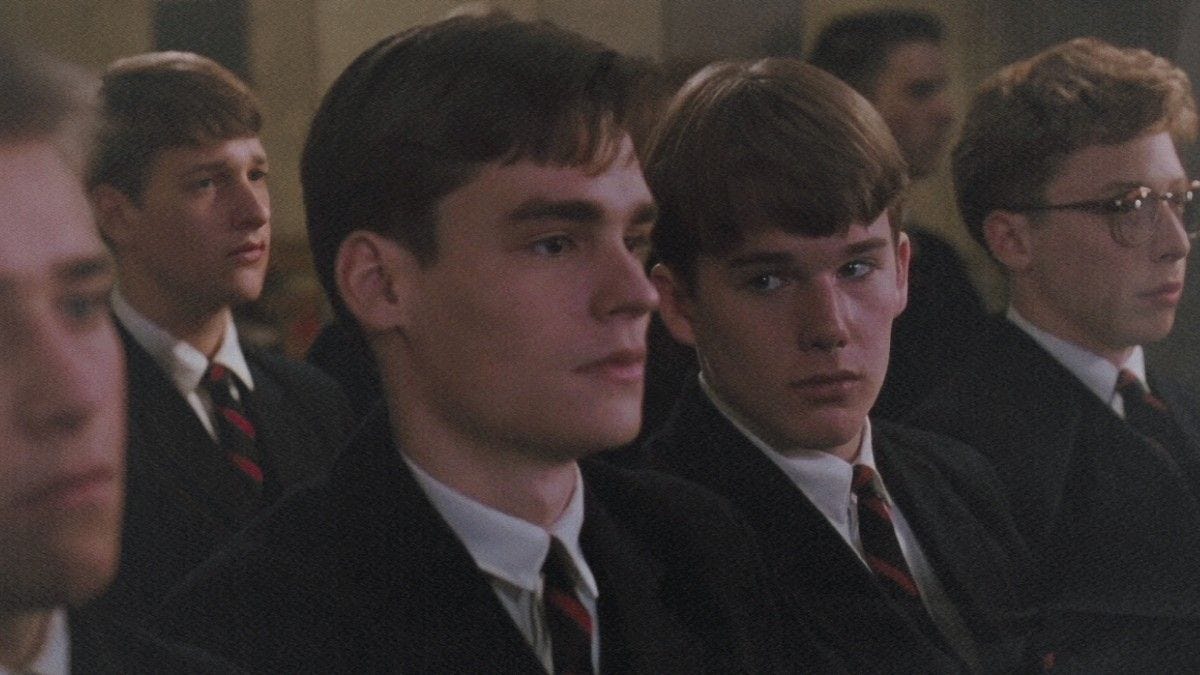
But what actually is queer subtext and why is it a thing?
Well to put it simply, queer subtext is when a piece of media has hidden meanings that suggest a queer identity or theme. It is seen through small interactions between characters or even visual symbols (IT is a great example for both of these). Queer subtext can be done both intentionally or unintentionally. It can often be the product of viewers finding pieces of their identity hidden between the lines of stories.
Queer subtext has been used for decades, especially during eras when LGBTQ+ representation was not allowed or risky. During the 1930s the Hays Code was created, these were a set of guidelines that all film studios had to follow. It included rules such as no graphic violence, drug use or explicit relationships. Another element of the code was that “any inference of sex perversion,” including homosexuality, was prohibited.
And thus queer subtext was utilised. It was a way for creative individuals to express their views and create representation without making it too obvious. Audiences that were able to ‘read between the lines’ could pick on these hints of queerness. Though those who did not seek for it most likely didn’t, allowing subtle queer representation to stay under the radar.
Sometimes queer subtext is fully interpreted by the audience and was unintentionally created. This is just an example of individuals seeking comfort and identity in media and characters that they may relate to.
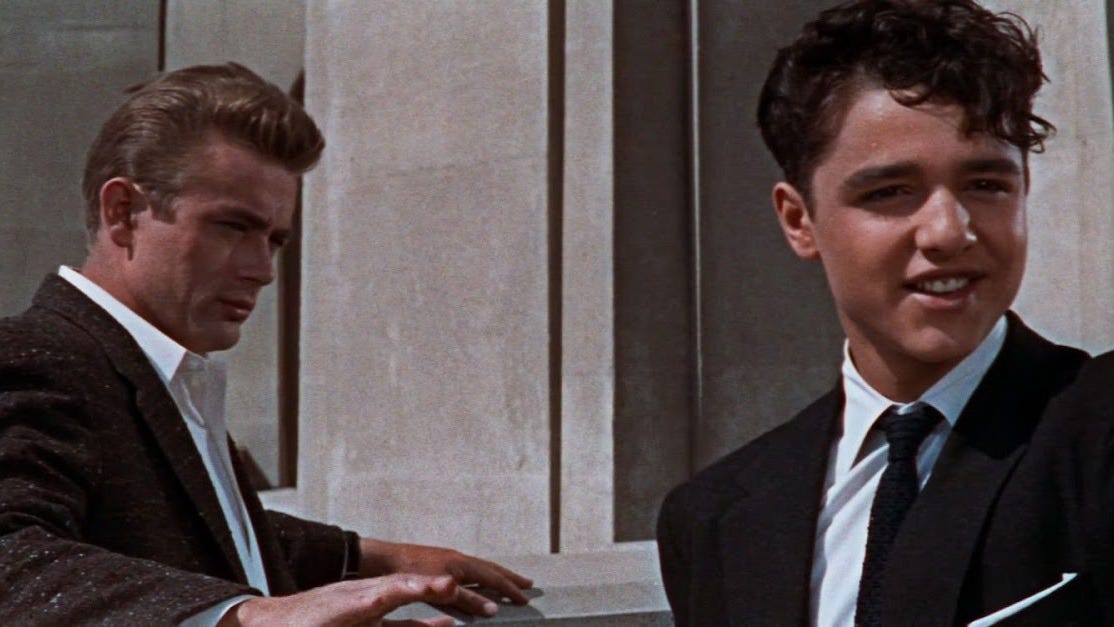
An example of an older film with queer subtext is Rebel Without A Cause (1955). It is a classic which stars the infamous James Dean. Plato can be heavily interpreted as being queer, through the adoring gazes he gives Jim or through him having Alan Ladd taped inside his school locker. Nowadays Rebel Without A Cause is widely recognized for it’s queer coding and Plato is often cited as being one of the first gay teenage characters in film history.
The fact that Nicholas Ray (director) was able to include quite explicit queer subtexts, for the time, in his film and managed to work around the Hays code is applaudable.
Fortunately, society has progressed and LGBTQ+ representation does not need to be supressed to queer subtext. There are countless successful films with queerness at the centre of its plot, such as Call Me By Your Name, Waves or Brokeback Mountain.
However, many contemporary films still use queer subtext!
My favourite and most widely accepted example is Richie and Eddie from IT Chapters 1 & 2. The queer subtext in these two films goes hard. In IT, Pennywise confronts Richie saying he has a ‘dirty little secret’ and whilst it isn’t confirmed what this secret is, many audiences have interpreted it to be linked to Richie’s sexuality. Additionally, Richie and Eddie are the closest pairing in the Losers’ club. Whilst they are close with the other members, the two seem to have a closer and deeper bond, this is seen explicitly in Chapter 2.
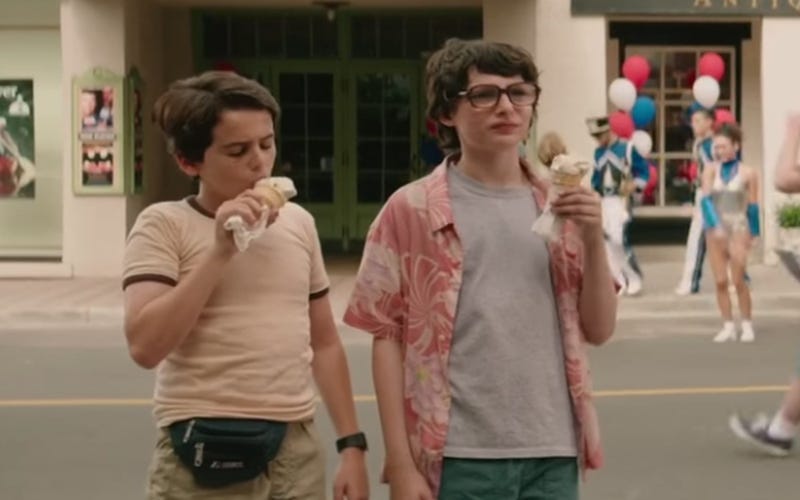
The most explicit piece of evidence we have for their relationship being less platonic is Richie engraving their initials (R+E) onto the back of a fence. Whilst this could be seen as platonic, the context with the other pieces of evidence pushes their relationship to be more romantic.
![Pride 2020] Richie Tozier As The Unlikely Queer Horror Icon — Gayly Dreadful -- Bursting out of your closet with the latest horror reviews](https://substackcdn.com/image/fetch/$s_!24QY!,f_auto,q_auto:good,fl_progressive:steep/https%3A%2F%2Fsubstack-post-media.s3.amazonaws.com%2Fpublic%2Fimages%2F63757f7d-04ea-4f03-a737-86135db87024_1200x1200.jpeg "Pride 2020] Richie Tozier As The Unlikely Queer Horror Icon — Gayly Dreadful -- Bursting out of your closet with the latest horror reviews")
But why do contemporary films still use queer subtext?
It could be for numerous reasons, it honestly depends upon the directors/writers. Using subtext can be a way for directors to build a connection with their queer audience, who are able to pick up on subtle hints and are actively seeking out queer narratives.
Another potential reason, is that subtext allows for deeper and more layered artistic interpretations of themes beyond the simple and explicit storylines. If we look at The Dead Poets society, this can be seen clearly.
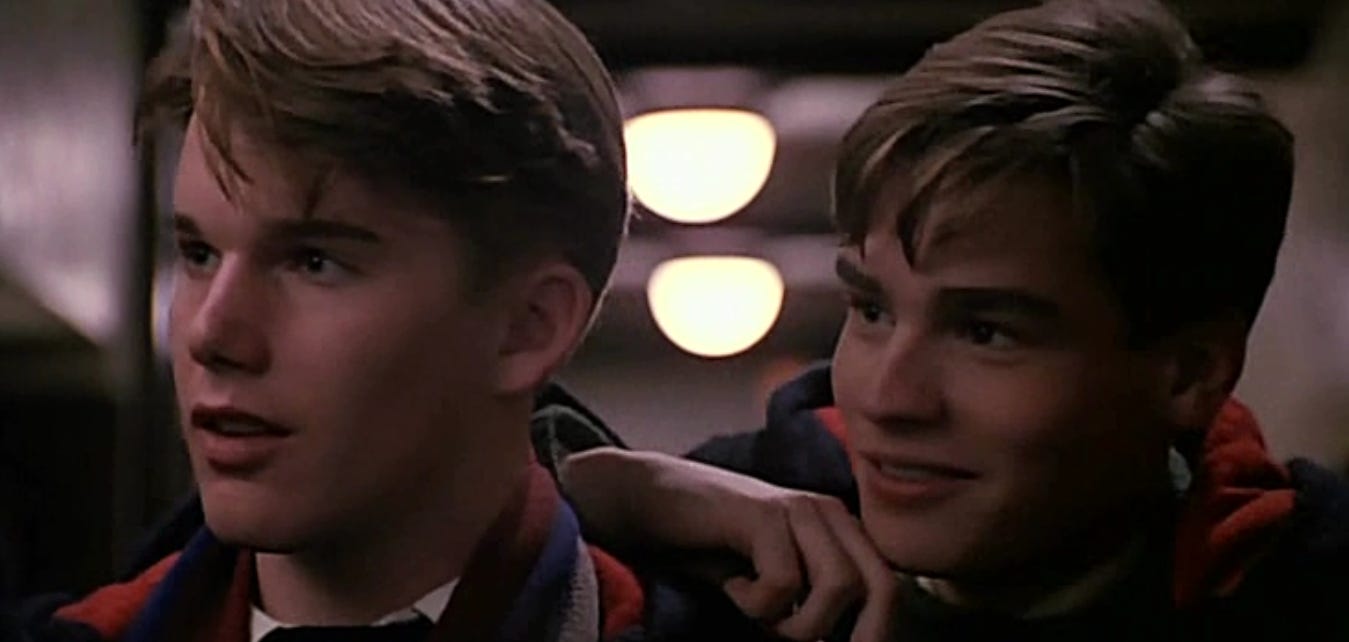
The Dead Poets Society is an incredibly deep film which focuses not only on the beauty of words but also mental health, connections, influences and aspirations. However, this film can be interpreted to an even greater depth when looking at the relationship between Neil and Todd.
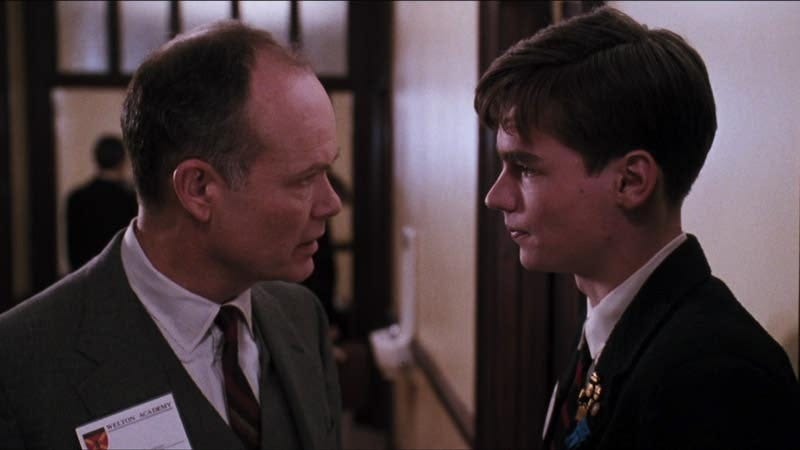
On the surface they are close friends, but it is heavily inferred that their relationship goes beyond that. If you accept this interpretation then a whole new perspective can be taken on the film. Neil’s acting and his fathers disapproval for acting can be seen as metaphors for queerness and homophobia. The interpretation of Neil and Todd’s relationship going deeper then just friends adds a whole knew depth to the film.
The reasons for using queer subtext are unlimited, it is all dependent on the director. And again, queer subtext can sometimes be unintentional and be found in unconventional texts.
Queer subtext has always been more than hidden meanings, it’s a quiet act of resistance and recognition. In eras where queerness couldn’t be spoken, people found ways for it to still be seen and felt. Even as representation becomes more explicit today, the art of subtext reminds us that queerness has always been present in shaping stories even if it was done subtly.
Mainstream films with potential queer subtext:
IT Chapter 1 & 2 (Richie and Eddie)
The Dead Poets Society (Neil and Todd)
Rebel Without A Cause (Plato and Jim)
Rebecca (Mrs. Danvers and Rebecca)
The Lord of the Rings trilogy (Sam and Frodo)
X-Men franchise (Magneto and Professor X)
Death Becomes Her (Madeline and Helen)
Point Break (Johnny and Bodhi)
Bride of Frankenstein (Themes more than characters)
Luca (Luca and Alberto)
Jennifer’s Body (Jennifer and Anita)
Pitch Perfect (Beca and Chloe)
Captain Marvel (Carol and Maria)
Ray/Pete (the long walk) and Jayce/Viktor (Arcane) come to my mind immediately because I saw pure love between these characters but it’s just brushed aside in the name of them being ‘brothers’ which I just think is a bit silly because there are some other great examples of male platonic relationships.
While I kind of get some of the subtextual queer symbolism and homoeroticism in those films (Like X-men...), I think we should not confuse the fact that before the moral panic of homosexuality took hold, people used to have deep friendships that seemed "gay" or sometimes crossed boundaries. So Luca and Lord of the Rings, I am not sure they really have gay subtext, more like coming from a culture that is no more. (In the case of Luca, it is literally a calque of the writer´s childhood in Italy)